
Key takeaways
- Find a sunscreen that calms an oily T-zone without drying out your cheeks, with five formulas made for combination skin and easy everyday wear.
What's inside
As an Amazon Associate I earn from qualifying purchases. This post may contain affiliate links at no extra cost to you.
Combination skin asks for two opposite things at once. The forehead, nose, and chin turn shiny by midday, while the cheeks can feel tight or dry, especially after cleansing. A heavy sunscreen makes the T-zone greasy, while a very drying formula leaves the cheeks flaky and uncomfortable. The real decision is finding a product that balances both zones, so the oily areas stay matte and the dry areas stay comfortable.
This guide is for people whose skin changes across the face and across the seasons, and who want one daily sunscreen rather than a shelf of single-zone products. Each product below was chosen from its Amazon listing, using the skin-type, finish, and ingredient details stated on the product page, with a focus on formulas that suit mixed skin.
Quick Picks
As an Amazon Associate we earn from qualifying purchases
| Product | Best for | Key spec from title |
|---|---|---|
| CeraVe AM Facial Moisturizing Lotion SPF 30 | A one-step morning moisturiser with sun protection | Broad Spectrum SPF 30 lotion |
| Neutrogena Hydro Boost Water Gel Lotion SPF 50 | Oily T-zone with dry cheeks that need hydration | Broad Spectrum SPF 50 gel lotion |
| La Roche-Posay Anthelios Clear Skin SPF 60 | Shiny, breakout-prone skin in heat and humidity | Broad Spectrum SPF 60 dry touch |
| EltaMD UV Clear SPF 46 | Sensitive combination skin that reacts easily | Broad Spectrum SPF 46 lotion |
| Cetaphil Daily Facial Moisturizer SPF 50 | A gentle daily face lotion for mixed skin | Broad Spectrum SPF 50 lotion |
How to Choose
Balance oil control with hydration
Combination skin needs oil control in the T-zone and moisture on the cheeks, so look for formulas that describe themselves as oil-free and hydrating at the same time. Gel lotions and lightweight lotions usually manage this balance better than thick creams, because they add water-based moisture without a heavy oil layer. Hyaluronic acid is a useful ingredient here, since it hydrates without adding grease, and it appears in several of the products below. A gel that hydrates without oil is usually the safest starting point when both zones need different care.
Check the finish, not just the SPF
The finish decides whether a sunscreen works for combination skin. A dry-touch or matte finish keeps the forehead and nose from shining by lunchtime, while a dewy finish can make an oily T-zone look worse within an hour. If you wear makeup, a matte or sheer finish also helps foundation sit evenly across zones that behave differently. Read the listing for words like dry touch, matte, or sheer, and avoid anything described as rich or nourishing unless your cheeks are very dry.
Watch for ingredients that suit both zones
Niacinamide helps combination skin because it supports the skin barrier and can calm the look of redness without drying anything out. Ceramides do similar work on the dry patches, and zinc oxide suits skin that breaks out easily. Fragrance-free formulas are the safer choice when your cheeks react to scented products, and non-comedogenic claims matter if your T-zone clogs easily. If a product lists both niacinamide and ceramides, it is usually built for mixed skin rather than one zone alone.
Think about how it layers with the rest of your routine
A daily sunscreen has to sit well over your morning moisturiser and under makeup, or you will stop using it. Lightweight lotions and gel formulas usually layer cleanly, while heavier creams can pill or slide off by midday. Apply sunscreen as the last step of your morning skincare, give it a minute to settle, and then apply makeup. If a product pills over your moisturiser, try a smaller amount of moisturiser underneath rather than switching sunscreens straight away. A sunscreen that pills over moisturiser is rarely worth keeping, since you will reach for it less often each morning.
The 5 Best Options
CeraVe AM Facial Moisturizing Lotion SPF 30

CeraVe AM is the simplest answer for combination skin, because it is a moisturiser and a sunscreen in one bottle. It hydrates the cheeks with hyaluronic acid and ceramides while staying oil-free, so the T-zone does not turn shiny soon after application. The SPF 30 rating suits daily indoor and outdoor routines, and the fragrance-free formula is gentle enough for skin that reacts to scented products. The pump bottle keeps the dose consistent, which helps you apply the same amount every morning without guessing.
Specs
- Broad Spectrum SPF 30
- Lotion, 3 fl oz bottle
- Oil-free and non-comedogenic
- With hyaluronic acid, niacinamide, and 3 essential ceramides
- Developed with dermatologists
Best for: A one-step morning routine when you want moisture and sun protection without layering several products.
Watch out for: SPF 30 is a daily-use rating, so pair it with a higher SPF product for long days in strong sun.
Neutrogena Hydro Boost Water Gel Lotion SPF 50
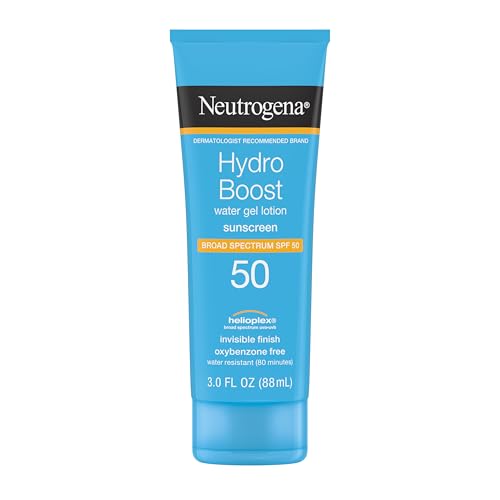
Hydro Boost suits combination skin that feels dry in some areas and oily in others, because the water gel texture adds hydration without weight. Hyaluronic acid draws moisture into the skin, while the gel lotion dries down light rather than greasy, so the T-zone stays comfortable through the day. The SPF 50 rating gives a wider margin for outdoor time than a daily SPF 30. It also layers cleanly under makeup, which matters when you want hydration without a heavy base.
Specs
- Broad Spectrum SPF 50
- Water gel lotion, 3 fl oz tube
- Water resistant for 80 minutes
- With hyaluronic acid
- Oxybenzone free, non-greasy, and oil-free
Best for: Combination skin that needs real hydration on the cheeks without adding shine to the forehead and nose.
Watch out for: The gel texture can feel slippery on very oily skin in humid weather, so use a thin layer and let it settle.
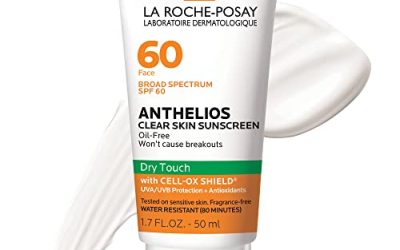
La Roche-Posay Anthelios Clear Skin SPF 60
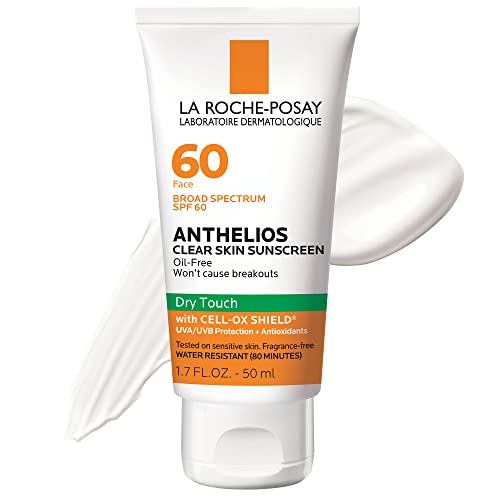
Anthelios Clear Skin is built for the oily side of combination skin, with a dry-touch formula that absorbs excess oil and leaves a matte finish. It suits hot and humid days when the T-zone shines within an hour of applying a normal sunscreen, and it is made for skin that breaks out easily. The SPF 60 rating and water resistance make it a strong choice for outdoor days as well as daily wear.
Specs
- Broad Spectrum SPF 60
- Dry-touch lotion, 1.7 fl oz tube
- Oil-free, with Cell-Ox Shield and antioxidants
- Will not cause breakouts
- Fragrance-free and water resistant for 80 minutes
Best for: Oily, breakout-prone combination skin in heat and humidity, when shine control matters most.
Watch out for: The dry-touch finish can feel drying on the cheeks in winter, so add a light moisturiser underneath in cold months.
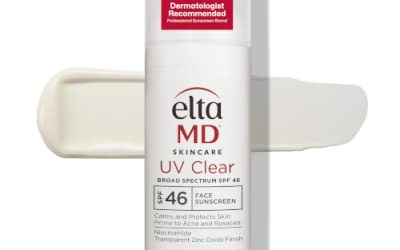
EltaMD UV Clear SPF 46

UV Clear is the calm option for combination skin that also reacts easily, with niacinamide and a transparent zinc oxide finish that suits sensitive areas. It is oil-free and lightweight, so it does not add shine to the T-zone, and it is widely used by people whose skin breaks out or flushes with heavier formulas. The pump bottle keeps the amount consistent, which helps you apply the same layer every morning.
Specs
- Broad Spectrum SPF 46
- Lotion, 1.7 oz pump bottle
- Oil-free, with niacinamide and transparent zinc oxide
- Calms and protects skin prone to acne and rosacea
- Fragrance-free and non-comedogenic
Best for: Sensitive combination skin that needs a gentle, non-irritating daily sunscreen.
Watch out for: It is not water resistant, so choose a different product for swimming, heavy sweating, or beach days.
Cetaphil Daily Facial Moisturizer SPF 50

Cetaphil Daily Facial Moisturizer is a gentle daily lotion for combination skin that does not want anything complicated. It is lightweight and non-greasy, with broad spectrum SPF 50 protection that covers a full day of normal outdoor exposure. The fragrance-free formula suits skin that reacts to scented products, and it layers well under makeup without pilling. The simple formula makes it easy to use daily without worrying about how it interacts with other skincare.
Specs
- Broad Spectrum SPF 50
- Lotion, 1.7 fl oz bottle
- Lightweight and non-greasy
- Fragrance-free and non-comedogenic
- For all skin types, including sensitive skin
Best for: A gentle, no-fuss daily face sunscreen for combination skin that reacts to heavier formulas.
Watch out for: The finish is more hydrating than matte, so very oily skin may want a mattifying product on top in summer.
Which One Fits Your Situation
Your T-zone shines by midday but your cheeks feel tight
Start with the Neutrogena Hydro Boost gel lotion, which hydrates the dry areas without adding oil to the shiny ones. If shine is still a problem by lunch, switch to La Roche-Posay Anthelios Clear Skin, whose dry-touch finish absorbs oil through the afternoon. Keep blotting paper in your bag for midday shine, since it removes oil without stripping the sunscreen layer underneath.
Your skin breaks out easily and reacts to new products
Choose EltaMD UV Clear, which is made for acne-prone and sensitive skin and stays gentle while protecting. Keep the routine simple around it, with a mild cleanser and a light moisturiser, so you can tell quickly whether the sunscreen itself suits you. Introduce only one new product at a time, so you can tell whether the sunscreen or something else caused a reaction.
You want one product for mornings, with no extra steps
CeraVe AM is the one-step answer, combining moisturiser and SPF 30 in a single bottle. It suits normal office days and short outdoor trips, and you can add a higher SPF product on top for long days outside. On longer outdoor days, add a higher SPF product on top rather than replacing a routine that already works.
You spend long days outdoors in heat and humidity
Pick La Roche-Posay Anthelios Clear Skin for its SPF 60 rating, water resistance, and matte finish. Reapply after sweating or swimming, and carry the small tube with you, since combination skin needs a fresh layer once the first one wears off. A small tube in your bag makes reapplication realistic, since combination skin needs a fresh layer after sweating.
Common Mistakes
- Using a heavy body sunscreen on the face and then blaming combination skin for the shine.
- Skipping moisturiser under a matte sunscreen, which leaves the cheeks dry and flaky.
- Applying sunscreen only to the T-zone and forgetting the cheeks, jawline, and neck.
- Choosing a dewy finish that looks good at 8 in the morning and greasy by noon.
- Never reapplying because the first layer felt perfect, even after hours outside.
Frequently Asked Questions
Can one sunscreen really work for both oily and dry areas?
Yes, if the formula balances hydration with oil control. Gel lotions and lightweight lotions with hyaluronic acid hydrate dry patches without adding oil, while oil-free and dry-touch finishes keep the T-zone matte. A product that is only mattifying can dry out the cheeks, and a rich cream can overwhelm the forehead.
Should combination skin use a moisturiser under sunscreen?
It depends on the product. A moisturiser-sunscreen like CeraVe AM needs nothing underneath, while a dry-touch formula like Anthelios Clear Skin benefits from a light moisturiser on the cheeks in winter. Apply moisturiser first, wait a minute, then apply sunscreen as the final step.
Does sunscreen cause breakouts on combination skin?
Sunscreen can contribute to breakouts when it is heavy, oily, or comedogenic, especially on the T-zone. Look for oil-free and non-comedogenic labels, and choose formulas made for acne-prone skin, such as EltaMD UV Clear or Anthelios Clear Skin, if your skin clogs easily.
How do I keep sunscreen from making my T-zone shiny?
Choose a dry-touch or matte finish, apply a thin even layer, and let it settle for a minute before makeup. Blotting paper can remove midday shine without removing the whole layer, but it does not replace reapplication after sweating or swimming.
Related guides
More from Amazon
Programs that pair well with the guide above. Offers and eligibility are set by Amazon and may change.
Free shipping on eligible items, Prime Video and more. Eligible new members can start with a free trial.
Start a Prime free trialAudiobooks and podcasts to listen to on the go. Eligible new members can start with a free trial.
Try Audible freeAd-free music streaming. Eligible new subscribers can start with a free trial.
Try Music Unlimited freeA free business account with business pricing and bulk-buying tools for work, shop or home office.
Create a business accountAs an Amazon Associate we earn from qualifying purchases.
Write Your Review
No reviews yet. Be the first to share your experience!